
Can art bring China, Africa closer?
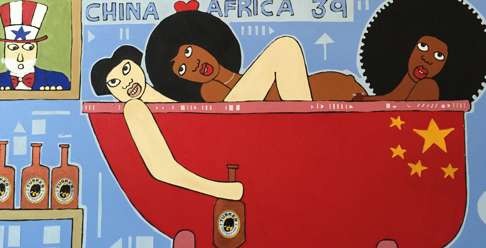
CHINA: A pertinent question is being asked as African artists turn their gaze toward the continent’s often complicated relationship with one of its biggest investors, China. Melissa Twigg asks whether contemporary art help mend the relationship between China and Africa? As international art collectors – and a growing echelon of Chinese among them wanting new works as the Asian market slows – take note of Africa’s emerging art market, flush with young edgy talent, they are also experiencing the themes and issues African artists are exploring such as rape, poverty and Chinese immigration and alleged corruption, bribery and environmental destruction. Read more.
Slave Shipwreck Artefacts Set for Washington DC exhibition
UNITED STATES: This year –in celebration of South Africa’s National Heritage Day on September 24 –will see the recently discovered artefacts of the Sao Jose (a Portuguese slave ship) wreck being displayed at an inaugural exhibition of the Smithsonian National Museum of African American History and Culture in Washington DC. According to South Africa’s Minister of Arts and Culture, Nathi Mthethwa, the representation and re-telling of stories such as that of the Sao Jose shipwreck, which caused the death of 211 enslaved Mozambicans, should not only be limited to Africans, but be told to the world over, as they signify the divisive historical injustices of Africa’s colonial past. Read more.
Judicial framework to support Tanzanian Artists
TANZANIA: In early July, representatives from the Pan African Lawyers Union (PALU), the Institute of Human Rights and Development in Africa (IHRDA), the organisation Fahamu-Pambazuka and the Swedish Foundation for Human Rights gathered in Tanzania to draw up an action plan for judicial framework to support artists. Artists across the African continent are increasingly vulnerable and struggle to find the legal support necessary to defend themselves. Thus the objective of the gathering was to identify the current flaws in the legal system at national level and better understand the precarious situation of many artists. One of the key issues that were raised is the need to inform the public about the various provisions contained in International Conventions and train lawyers to be able to defend the artists’ cases in court. Read more.
Miheala Noroc creates first Atlas of Beauty
ROMANIA: IN A unique circumnavigation of the world’s faces, the pioneering photography project, ‘The Atlas of Beauty, produced by young photographer Mihaela Noroc, is an ode to the global beauty of women. Noroc, a 30-year-old Romanian born photographer, has devoted her life to travelling the world and to photography. Three years ago, she quit her job, left Romania and took to the world’s highways, by using her savings to fund her project. Thus far, she has travelled to more than 45 countries. The genesis of the idea was born when she was in Ethiopia and became intrigued by the vast traditional cultures and traditional attires worn by the women – a complete contrast to that of the modern world as we know it now. The astounding Atlas aims to capture the varied meaning different of beauty. The first Atlas of Beauty was produced in 2013, and Noroc is fundraising to reach more countries and expand the project. Read more.
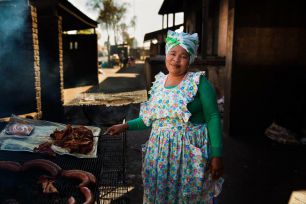
Picture courtesy
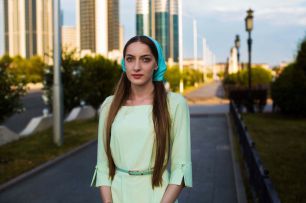
Picture courtesy
Picture courtesy
An online cultural mobility funding guide for Africa
INTERNATIONAL: IN FEBRUARY 2016, Art Moves Africa, Korea Arts Management Service and On the Move co-published the Guide to funding opportunities for the international mobility of artists and culture professionals Africa. It was developed to assist artists with crucial information relating to funding opportunities. The guideline also provides an overview of the funding bodies and programmes that support the international mobility of artists and cultural operators, both from Africa and those travelling to Africa. It also aims to provide input for funders and policy makers on how to fill the existing gaps in funding for international cultural exchange. The Guide documents 87 funding organisations and 133 funding schemes related to Africa, with 38 funding bodies and 48 funding schemes with an international reach; as well as key resources on mobility funding for artists and cultural organisations. The content of the Guide was collected between August and December 2015, and thus has the most up-to-date funding information. DOWNLOAD THE GUIDE HERE.