
Chinese literature in Africa: meaningful or simply ceremonial?
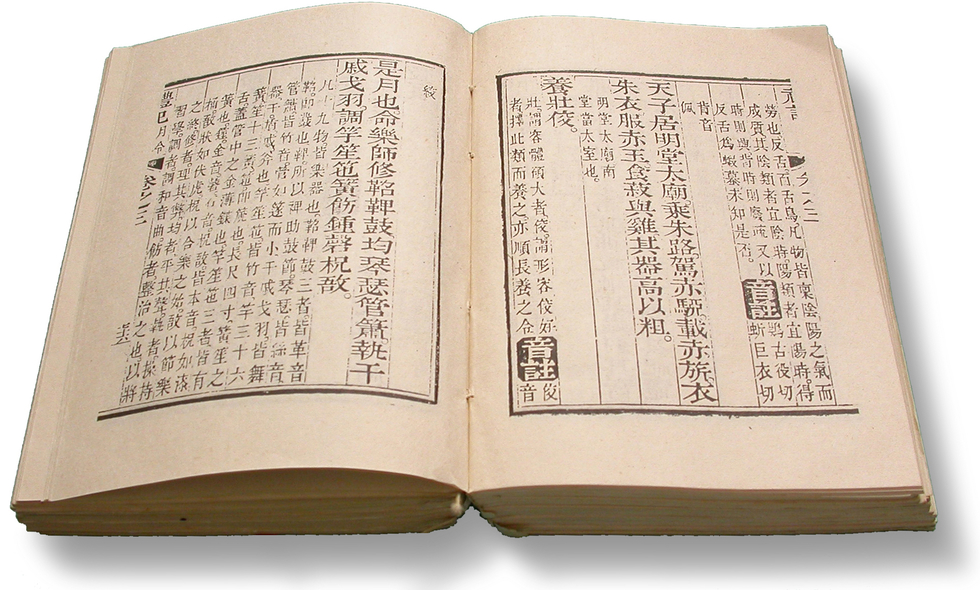
BENIN: Sino-African relations are a major point of interest, especially over the past 20 or more years. The commentary, according to Catherine Gilbert Teaching Fellow in Comparative Literature, King's College London, tends to focus on trade, economic investment and aid and is often negative in tone. Based on interviews she conducted in Benin in early 2015, culture is perceived as the most positive aspect of the relationship. Cultural exchange is a crucial domain of interaction, and one in which China is investing heavily. China has a growing ambition to become a major world cultural power and to compete with Western cultural influence. If China aims to counter the cultural hegemony of the West, the translation and exporting of its literature plays a vital role. The export of its cultural products is key if China is to gain visibility on the global stage. In 2006 the Chinese government announced a strategic five-year plan for cultural development. Numerous projects were launched to promote China’s publication exports. The most well-known of these is the China Book International programme. This is sponsored by the government to sell its printed media abroad. As Chinese scholar Li Mingjiang has observed, the distribution of Chinese literature abroad is a tool for “cultivating a better image of China” and “correcting foreign misperceptions”. To understand the dynamics of Sino-African cultural exchanges better we did a survey of Chinese literature available in translation across Africa. This article was originally published on The Conversation. READ MORE.
Ever wonder how a fashion icon plays the art market?
NEW YORK: IT was the glory of the early 1980s when top designer Tommy Hilfiger met the artist Andy Warhol. “He brought me to his Factory and showed me his art,” Hilfiger said. “At the time, I wasn’t in a position to buy it, which is too bad, because it would have been a great investment.” Over 30 years later, Hilfiger has become what he discretely describes as “self-sufficient” after selling his company for $1.6 billion in 2006 and he’s emerged as a dedicated art collector. “I like to buy and sell all the time,” he said. “I’m very interested in knowing who’s who, and what something is worth, and whether or not it would have a resale value.” To that end, Hilfiger, who estimated that he has about 50 artworks spread across his houses in New York, Connecticut, and Miami. Hilfiger’s top lot is a 1987 painting by Jean-Michel Basquiat, Untitled (Devil’s head), which hung in the foyer of his Manhattan apartment. Hilfiger said he bought the work after seeing it at Art Basel Miami Beach. READ MORE.
Australia's gaming industry forces rethink of creative economy
AUSTRALIA: The creative economy is a central focus for a number of Australian cities which have leveraged policy with the aim of diversifying their economy. These policies are about attracting and retaining entrepreneurs and firms from the creative industries sector, such as the music and fashion industries, but also Sebastien Darchen from The University of Queensland, shows, is having an impact on gaming. Invoking Michael Porter’s cluster theory, the results are surprising forsome sectors, including the gaming industry. Recent research on the video game industry in Australia has shown that new technologies have greatly influenced the production of games. The industry functions as a “networked community” and not strictly as spatially bounded clusters. The use of the internet enables small companies to produce games from remote areas – and as such industry structures are changing. The research finds that the composition of the industry has changed significantly since 2006-07, with the closure of several development studios that focused on console games, such as Krome Studios. A variety of platforms – Unity 3d, mobile phones etc – is now available to game developers. With the shift from console games to mobile phone games, the industry has changed dramatically. The nature of the demand has changed too: consumers of video games are now looking for a quick and fast experience. This article was originally published on The Conversation. READ MORE.
‘Fame’ matters, but critics & reputation more?
FRANCE/UNITED KINGDOM: In creative industries (and beyond), an ‘expert’ critical elite mediates ‘peer’ and ‘market’ reputation into fame, says a new study published in the journal Organization Studies. A new study – entitled “Exploring the Links between Reputation and Fame: Evidence from French Contemporary Architecture” – by academics in France and the UK, just published in the journal Organization Studies, concludes that the key to fame lies in “expert reputation” among a knowledgeable “cultural elite” – who serve as a mediator for achieving fame for organisations that already enjoy a high “peer” or “market” reputation. The study, which focuses on the French architectural industry, uses the sociological concept of “fame” based on the volume of public discourse about an entity. “We found that experts can transform a creative organisation’s specific reputation among peers and clients into a wider sense of public fame,” says study co-author Shazhad (Shaz) Ansari, Professor of Strategy & Innovation at University of Cambridge Judge Business School. “Fame comes from the mediation of different reputations among audiences, and there’s clearly a crucial role here for experts such as critics. Experts as fame-makers can decrypt avant-gardism and innovative works for novices, generating a wider understanding for the general public so an organisation can become familiar and sufficiently comprehensible to a generalist audience.” The study has implications for organisations in the creative industries and beyond, the authors say, including in professions such as accounting and law “where innovation, reputation and fame, as well as validation from peers, are important factors in establishing professional standing.” READ MORE.
Six figure salary for museum communications – apply here.
WASHINGTON: A recent advert for a social media manager at the Smithsonian’s new National Museum of African American History and Culture (NMAAHC) in Washington, DC, offers a salary ranging from $92,145 to $119,794—showcase how much modern day museums rely on digital expertise. “Social media jobs are some of the most exciting and influential non-curator jobs,” says Sree Sreenivasan, the former chief digital officer at the Metropolitan Museum of Art in New York.
A recent ad for the new communications director post at the Victoria and Albert Museum in London specified that candidates “make best use of existing and emerging social media channels”. The estimated salary for the role is £100,000—around double that of a senior curator at the museum’s planned outpost in east London, advertised last year with a pay band of £36,546 to £54,561. READ MORE.