
Note from the Culturalist: CEO
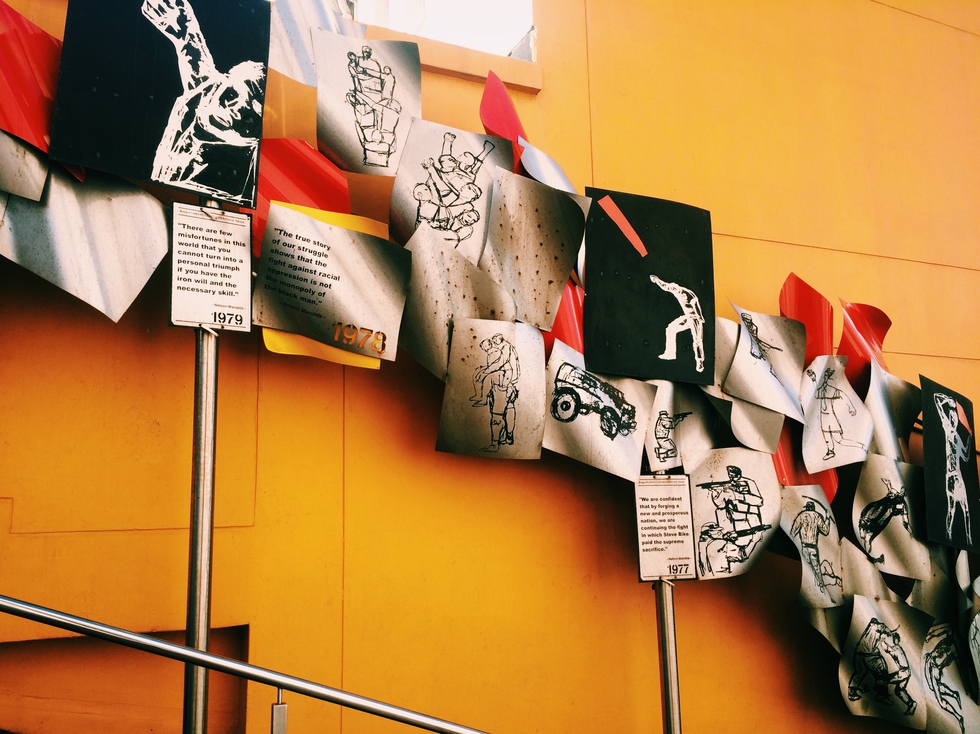
YOUTH Month brings many things about South Africa into sharp focus. It reminds us of how far we have come and how far we have to go as a country. Famous, post-war Polish poet, Stanislaw Jerzy Lec, said, ‘Youth is the gift of nature, but age is a work of art’ reminding us that we must both value the gift of youth, but work on its vagaries to shape a work of art.
At the moment, the youth of South Africa are discouraged and are making sure their frustrations are heard. Art has played a varied and interesting role in this expression, both as a tool and a target for making statements. This raises the question why? What is so powerful about the arts, culture and heritage that makes people want to persecute or protect it?
We operate in a symbolic world, although sometimes it feels like it is only mere numbers that determine our fate. Because of the centrality of symbolism, acts – creative or otherwise – draw out our emotions. But like youth, symbolism is a gift to be used wisely and shaped over time into a work of art… and there is lots of ground-breaking shaping on going.
The youth of South Africa are making significant strides to shape the creative and cultural industries that will be future income for talented many, possessed or dispossessed. I am fascinated by the people profiled on the incredible industry website, Between 10 and 5, which recently profiled 16 young people influencing and shaping contemporary creative culture. In general the site plays an important role in showcasing the creative depth of our country.
In June, the Mail & Guardian published its 200 Young South Africans insert featuring 200 notable South Africans under the age of 35 – a total of 23 of these are from the arts & culture industry and 19 from media and film. Close to a quarter of our top young South Africans are making waves in their industries. It is easy to see how young people are the answer. Our own young researchers show me this every day with their novel approaches, integrated thinking and in general hunger to make a difference, contribution and to grow to serve our country.
But the youth are confronted by a constrained education system, especially one that does not have all the resources to offer arts education. The global trend shows a shift from STEM to STEAM, an holistic approach to education that considers the value of integrated learning across Science, Technology, Engineering, Arts and Mathematics. Art was added to STEM curriculum to draw on design principles and encouraging creative solutions. We need this more than ever in South Africa to encourage the type of positive and creative thinking that will help us with our many challenges and harness our limitless potential for greatness.
SACO Activities
As a young organisation, the South African Cultural Observatory has not been without its growing pains. There are many challenges to starting an organisation of this nature and gravitas. That said, we also have the passion, excitement, naivety and nimbleness of youth on our side, which balances the scales.
June was a busy month for the SACO, starting off with a team of our young researchers heading off to the South African Music Awards to conduct a perception survey of attendees – both those in the industry and those supporting it – on whether the SAMA’s are an important event to musicians and the industry and if they can shape an artist’s career trajectory. We are busy analysing the data from this event and will release a report on it soon.
In June I visited certain academic and industry representatives during the month, primarily in the Cape Town and Gauteng regions, with a desire to discuss potential partnerships and to explore new collaborative opportunities. A further objective was to begin the process of developing links with those state departments who would be willing to cooperate with SACO and the Department of Arts and Culture more generally in reinforcing the core research and service commitments of the Observatory.
This is a long-term but rewardable project given the growing number of organisations and practitioners in the ACH spaces in South Africa. It is important for the Observatory to build progressively our understanding of the large and expanding realms of culture within South Africa.
Dr Sybert Liebenberg, our Director of Research also attended an international conference on Cultural Diplomacy at the United Nations in New York.
Our library stock – open source on our website, via our online library link and our physical libraries at both the SACO offices and NMMU Missionvale – is growing on a daily basis. Please read the library story in this month’s newsletter to see what’s on the digital and actual shelves or visit our SACO library site and sign up.
We will also be issuing a couple of surveys over the coming months and I implore you to contribute, participate and also share your insights.
While the whole industry descends on the hamlet of Grahamstown for the National Arts Festival, I look forward to seeing you there and your attendance at Prof Jen Snowball’s talk at ThinkFest on 1 July at 10am on ‘Mapping the Cultural Industries in South Africa’.
Until then, enjoy the June edition of The Cultural Observer.
Your culturalist,
Prof. Richard Haines
South African Cultural Observatory: CEO