
Rapid Response Teams Necessary for Conflict Zone Conservation
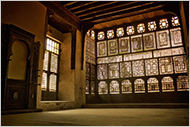
EGYPT: Abdel Hamid Salah el-Sharief arrived at the Museum of Islamic Art in Cairo, Egypt to confront a glittering sea of broken glass. Past the smashed wooden doors and the acrid haze of smoke, the remains of the museum’s extravagant windows lay broken into countless pieces on the floor. What once offered a glimpse into the world of Islam’s Golden Age, and accentuated some of the museum’s most prized collections, now illuminated nothing but the bomb’s extensive carnage: 15th-century glass lamps shattered, hundreds of ceramic artifacts disintegrated – an interior peppered with debris. Read more
Big Art Fairs Great for Business, but Bad For Art
HONG KONG: You were out of luck if you wanted to find a hotel room in Hong Kong this weekend. Art Basel Hong Kong opened on Friday the 13th, and a large chunk of the global art world descended on the city. Art Basel is Asia’s largest art fair, but it has plenty of competition around the world. There are now 180 major international art fairs held annually, accounting for over €10 billion ($10.5 billion) in sales. The top tier of the art fairs, about a fifth of the overall total, together bring in over a million visitors a year, and helped drive the overall art market to record sales of €51 billion in 2014. Read more
Artist Protection Fund
The Artist Protection Fund (APF) is a three-year pilot program at the Institute of International Education. With funding from the Andrew W. Mellon Foundation, APF will make life-saving fellowship grants to threatened artists from any field of artistic endeavor, and place them at host universities and arts centers in safe countries where they can continue their work. Threatened artists from any field of artistic endeavor, such as visual arts, writing, music, dance, and theater, will be eligible for support. Threatened artists can be from any country in the world and can be placed in any country where they can safely continue their work. Read more
Why the Armory Show in New York is focusing on Africa
NEW YORK: In October 2010 a wealthy South African, bidding at Bonhams in London, bought a portrait of a doe-eyed Indian girl from the island of Zanzibar that had been painted in 1945. The artist was Irma Stern, who was born in the Transvaal, the daughter of German-Jewish émigrés. Sentimental in style, it was not a fashionable work of art. Nevertheless, the bidder paid a record £2.37m ($3.3m) for the picture, more than twice the top estimate. Much has changed since that moment, when homesick white South Africans, grown rich on rising commodity prices, would spend millions on the work of artists who reminded them of their parents and grandparents and the white world they grew up in. Half a decade on, the global art world has discovered a quite different Africa—and in a big way. In the course of the 20th century African tribal art was praised by many outsiders, including Henri Matisse and Pablo Picasso, who absorbed what they saw as its “primitive” imagery into their own work. Read more
The Hidden Maths in Great Art
LONDON: Art and mathematics. For many, this would appear to be synonymous with chalk and cheese. One is the domain of emotional expression, passion and aesthetics. The other, a world of steely logic, precision and truth. And yet scratch the surface of these stereotypes and one discovers that the two worlds have much more in common than one might expect. Any creative artist will tell you that the emotional resonance of a piece emerges out of the construction of the work and is rarely an ingredient fed in at the beginning of a composition. The composer Philip Glass admits that he never deliberately programs any emotional content in his work. He believes it’s generated spontaneously as a result of all the processes that he employs. Read more