#SACOConf2017: Minister Foreword
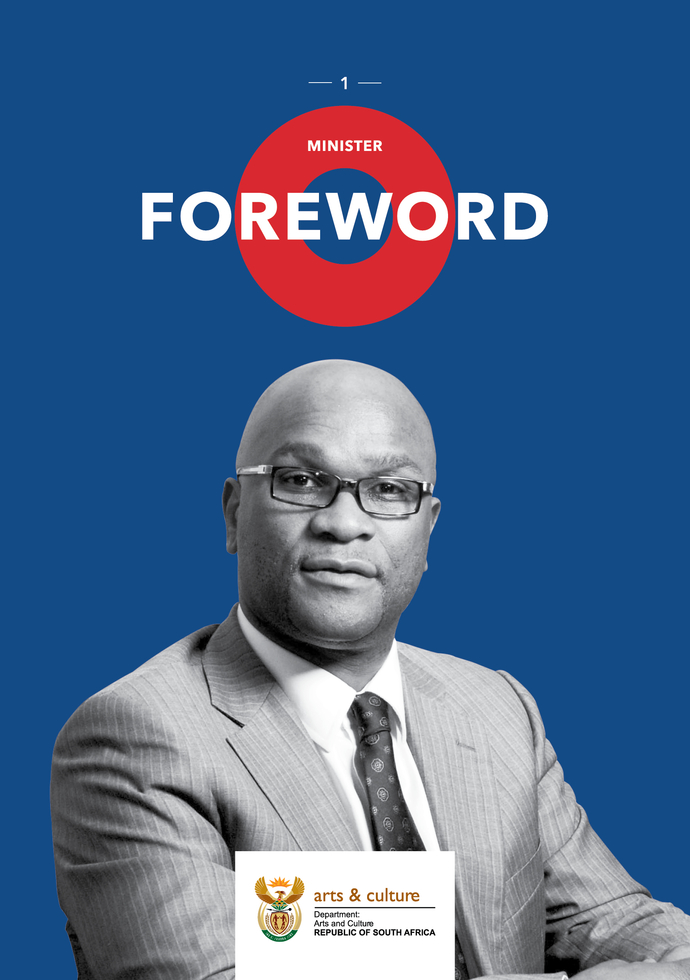
BY
NATHI MTHETHWA, MINISTER OF ARTS & CULTURE
29.05.17
ON BEHALF of the South African Department of Arts & Culture, it is a great pleasure to welcome you to the South African Cultural Observatory’s (SACO) National Conference 2017.
The SACO is a long-awaited project of the Department of Arts & Culture – and we are pleased with the progress made so far, some of which will be covered at this conference.
The vision for the establishment of a Cultural Observatory is enshrined in the Mzansi Golden Economy (MGE) Strategy, which the Department released in 2011. Indeed, much of the work of the Cultural Observatory is centred on analysing the impact of the MGE as a tool for further investment and a deeper understanding of the strategy’s impact.
Further to also find ways to enhance the contribution of the MGE strategy in the national effort to reverse the legacy of socio-economic injustice meted out against the majority people of this country.
Monitoring and evaluation, we know, is crucial for an expanded and nuanced understanding of the impact of Government’s programmes, strategies, and ultimately policies. We are excited to learn more about South Africa’s arts, culture and heritage sectors through new lenses so we can work to further expand its existing contributions and its potential.
SACO 2017 National Conference
This year’s conference builds on last year’s theme of ‘Counting Culture’ to explore the critical theme of the ‘Creative Economy and Development’. A discussion around the creative economy and development is pressing at a time when we need to be considering new options for inclusive growth, both locally and globally. In the face of widening economic disparity and the uncertainty brought about by shifts in growth patterns and the influence of technology, we urgently need to seek new approaches to economic transformation and development.
The development of the creative economy offers one such solution; and while not a silver bullet, is certainly one of the many tools in an arsenal for sustainable change and development. This conference is therefore a significant event for South Africa, as it marks the acknowledgement of the potential role and impact of the creative economy.
This is one sector that has the greatest potential to reflect the demographics of the South African society quicker than any other sector of country. This institute must itself reflect this, if we are to succeed in understanding the sector in totality.
Our knowledge about South Africa’s creative economy is growing, and will be amplified by the SACO’s research. Early data points to the South African creative economy contributing 2.9% to GDP (around R90-billion) – on par with global averages; and employs over 440 000 people. The sector also contributed R24-billion in taxes in the 2013/14 period, and helped underpin the empowerment of black South Africans, women and younger people. We know that over 50% of the creative industries and enterprises are owned by Black South Africans, 40% are owned by women and more than 30% by young entrepreneurs.
These initial figures show the potential of a better supported creative economy – something South Africa is intent on developing. The conference programme supports this thinking and I am very pleased to see a wide range of international, African and local perspectives on the programme. I invite all delegates to participate in robust, honest and critical debate and thinking so we might take the outcomes of the conference forward.
To the international and African delegates, we seek to learn from you and to offer you some insight into how the creative economy is evolving in South Africa and what shape it is taking.
The conference also coincides with Africa Month and Africa Day celebrations – which means we highlight the tangible and intangible wealth of Africa and its people. The conference programme features some very interesting African perspectives, and I hope you enjoy a raised awareness of what the African creative economy has to offer, more broadly.
In general, I hope you gain considerably from this conference and benefit from the insights, best practices, examples, case studies on offer in the full, varied and interesting conference programme.
Thank you and enjoy the excellent programme,
HON. NATHI MTHETHWA
MINISTER OF ARTS & CULTURE