
Word from DAC
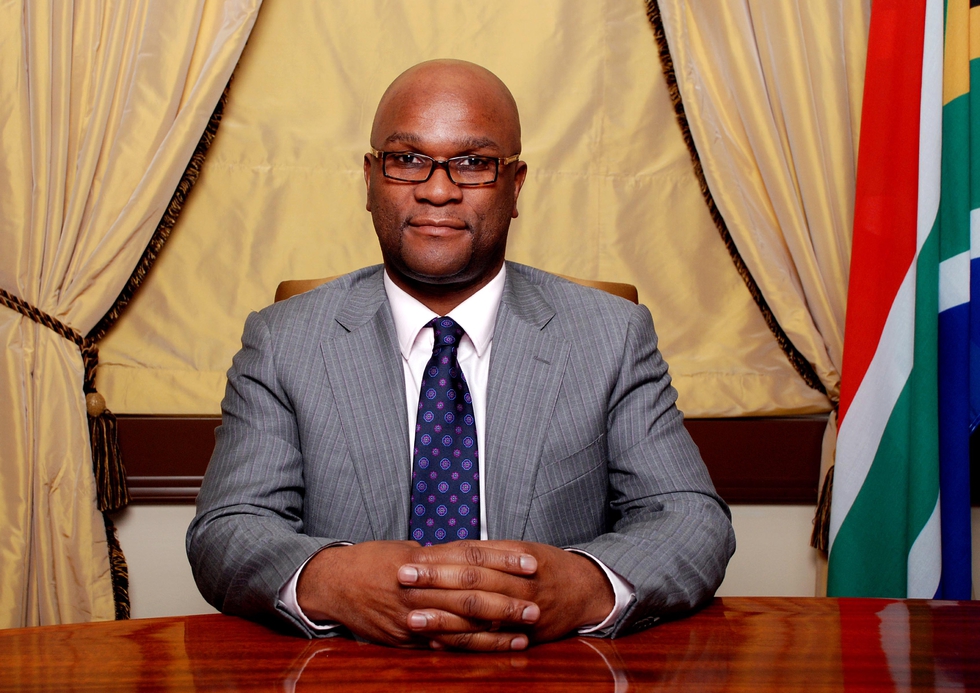
By Minister of Arts and Culture Nathi Mthethwa
In a Way of Being Free, the famous writer, Ben Okri, tells us that:
“The only hope is in the creation of alternative values, alternative realities. The only hope is in daring to redream one's place in the world - a beautiful act of imagination, and a sustained act of self becoming. Which is to say that in some way or another we breach and confound the accepted frontiers of things.”
This brings to mind matters of mapping and going beyond the borders that entrap us in separate spaces, divided identities, polarities of rich and poor, black and white, rural and urban, and the resultant seemingly divergent paths.
But in order to bridge the gaps and deep divisions that apartheid thrust upon us, it is important that we embark upon mapping studies and do this in an organized way through establishing a cultural observatory whose task it is to collect, analyse and interpret cultural data. This enables us to better understand our reality, know our strengths and the nature of our activities.
Importantly, armed with all this information and analysis, we shall have in our possession a rich cultural repository of local, provincial and national arts resources. By tracking the data over time, we can identify trends and make interventions. In this way, we make informed choices. The act of redreaming the world which artists do best becomes an act of self becoming, as Ben Okri has said, but also beyond this, an act towards national belonging.
The Department of Arts and Culture has initiated the establishment of a cultural observatory as one of the pillars of the Mzansi Golden Economy Strategy which seeks to increase and enhance the contribution of the arts and creative industries to South Africa’s social, economic and cultural development.
The year 2016 is well into its stride. Much ground has been covered. Yet this is a year in which racism continues to rear its ugly head, breaking our stride and threatening to disrupt our collective journey towards a non-racial South Africa, eager to to distract us from our nation-building and social cohesion project and that sense of national belonging which the arts can provide through broadening our cultural imagination.
It is our hope that the cultural information system, which is developed, will present us with dynamic information enabling us to understand the impact of the arts and to build arts, culture and heritage in South Africa. In this way, we shall reshape this map into a rich interactive space where we shall witness more cultural coalescence and also art that desires non-racialism and non-sexism, that crosses and confounds what Okri calls “the accepted frontiers of things.”