Piracy Is Stealing South Africa's Creative Future Here's What We're Doing About It
BY
30.06.26
Three streaming piracy sites now generate more monthly visits than any licensed South African platform. This is not a global statistic. This is happening right now, today, in our creative economy. Digital piracy isn't a victimless crime. It's an illicit ecosystem that drains hundreds of millions of rands from the pockets of South African artists, producers, and broadcasters every single year. But the damage goes far beyond revenue losses.
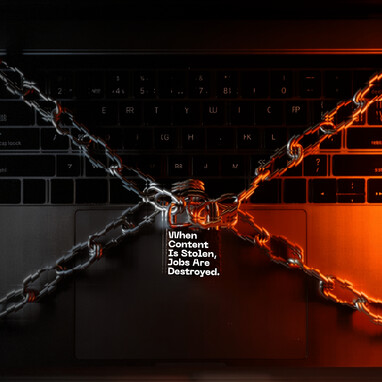
When content is stolen, jobs are destroyed. Emerging artists who can least afford legal battles see their work devalued before they've even had a chance to build a career. The money that should fund the next great South African film, the next chart-topping album, or the next world-class sporting event instead flows into the hands of criminals who use it to fund other criminal activities such as human trafficking and other illicit activities.
As Collen Dlamini, Executive Director of the Anti-Piracy Coalition, recently put it: “Criminality is no longer just a story of cops and robbers. In the digital age, piracy has become a sophisticated criminal enterprise, and pirates have emerged as the new kingpins." The worst part is that South Africa is being left behind. More than 60 countries around the world including the UK and other European countries have already implemented takedowns and site-blocking.
Site-blocking is a straightforward mechanism that allows rights holders to request that internet service providers take down websites that are illegally distributing copyrighted content. But in South Africa, we still don't have that legal framework. Pirates often operate offshore with impunity. They penetrate satellite broadcasts and streaming services, repackage stolen content, and sell it for a fraction of the price, all while our creatives watch their hard work being stolen in plain sight.
Unathi Lutshaba, Executive Director of the South African Cultural Observatory explains that “This isn't just about protecting artists. It's about protecting an industry that contributes over 3% to South Africa’s GDP and over R53 billion to the SA economy. It's about safeguarding an industry that employs thousands of women and young people, offering them meaningful careers and economic opportunity”.
When we fail to protect intellectual property, we fail to protect jobs. We fail to protect our cultural future. That's why the Anti-Piracy Coalition in partnership with Eastern Cape Development Corporation (ECDC), and others are taking-action. ECDC once framed the corporation's role as central to growing the province's economy through film, stating they play a "starring and enabling role in funding the industry".
Since its creation ECDC has funded 31 film productions and has created 9,020 temporary jobs and benefitted 696 small businesses across various sectors. The corporation is actively processing new film projects and building a business case for establishing film infrastructure in the province, indicating a strong commitment to the sector's growth.
On 2 July 2026, South African Cultural Observatory (SACO) in partnership with Anti-Piracy Coalition and Eastern Cape Development Corporation are hosting a Live Regulatory Sandbox at the National Arts Festival in Makhanda. This isn't another talk shop. It's a working session where key stakeholders, creatives, internet service providers, civil society, regulators, and government, will come together to stress-test real-world solutions and co-develop actionable recommendations for the Department of Communications and Digital Technologies (DCDT) and Department of Sport, Arts and Culture to consider.
The outputs will be concrete:
- A one-page Sandbox Communiqué capturing consensus findings
- A 12-month roadmap for implementation
- A set of agreed safeguard principles to protect public trust
The creative and cultural industries is a significant contributor to our economy and our national identity. It deserves protection. Whether you're an artist, a consumer, or simply someone who believes in a vibrant South African cultural future and we need you to join u in this fight against digital piracy.
This is our moment to act and to protect what's ours.