‘A language not spoken eventually dies’ – an observation from a researcher, Sinethemba Vitshima

BY 20.12.22

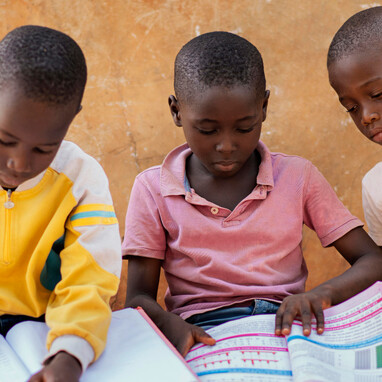
In recent weeks, the need to appreciate one’s mother tongue has never been more relevant than before. In her recent interview, Charlize Theron, stated that Afrikaans was a dying language, fast forward to a week later where a columnist in The Citizen asks the African community to sue her if allowing English to permeate her son’s development is a crime. Indigenous languages seem to be on the decline as African people increasingly adopt the English language as their mother tongue over their indigenous languages.

Paul Disain once said, “Our language and culture is the window through which we see the world.”  With South Africa taking pride in its rich cultural heritage that befits the cultural diversity of the population making up the nation, one must ask the question “what is indigenous language”? In its simplest form, it is the language that is native to a region and spoken by indigenous people who share the same cultural value and belief.

Indigenous languages are important for many reasons, one being that they give an individual their cultural identity. In the African community, we often get our names from our indigenous language that determines who you are and describes you as a person. The name you are given from your indigenous language rarely misrepresents you as person. Therefore the loss of language in our governmental systems creates a lot of division in our communities.

Indigenous languages transmit unique ways of understanding and relating to the world. Safeguarding Indigenous languages and knowledge is vital for addressing the current climate and humanitarian crises. Indigenous languages hold an exciting historical importance in their respective societies. Language preservation is important now more than ever, as it is an essential part of Indigenous culture. Authors such as SEK Mqhayi used their indigenous language to communicate political matters and to address the role of religion in his society. In their recent day to day school teachings, academics such as Paballo Chauke recently translated genetics/biology/science into isiXhosa so that the young, curious and brilliant minds could understand the science and gain an appreciation of it in their mother tongue. These kind of initiatives have all aided to the intellect of young people and have helped to foster their thinking. The Nigerian government recently approved a new National Language Policy which makes the mother tongue a compulsory medium of instruction from Primary 1 to 6. One wonders if it is time for South Africa to adopt the same policy.

Cross Continental Forum Announces Partnership with South African Cultural Observatory

Cross Continental Forum Announces Partnership with South African Cultural Observatory

CaribbeanTales Media Group has entered a new partnership between the Cross Continental Forum (CCF) and the South African Cultural Observatory (SACO), as CCF expands into a year-long international lab connecting Black and Global Majority producers across Africa, the Caribbean, Canada, the UK, Europe, and the wider diaspora.

The Unsilenced Voice: How Artists and Cultural Creatives Shaped the Narrative of the June 16 Uprising

The Unsilenced Voice: How Artists and Cultural Creatives Shaped the Narrative of the June 16 Uprising

June 16, 1976, will forever be remembered for the courageous actions taken by the youth to confront the injustice of Apartheid. The students of Soweto took to the streets to protest the imposition of Afrikaans as a medium of instruction, and their bravery ignited a fire that would eventually help dismantle an oppressive regime.

The Rise of Digital Entrepreneurship in South Africa

The Rise of Digital Entrepreneurship in South Africa

What if your next paycheque came from a 60-second video, a podcast recorded in your bedroom, or a cooking tutorial filmed on your phone? For a growing number of South Africans, this is no longer just a possibility, it is a career.

Measuring What Matters: SACO’s new South African Sport Impact Calculator

Measuring What Matters: SACO’s new South African Sport Impact Calculator

South Africa hosts a wide array of sporting events, ranging from local community competitions to internationally televised tournaments, with the sector generating significant economic activity. With a growing emphasis on accountability and value for money, government bodies, event organisers, and sponsors increasingly seek to understand how these events contribute to regional economies.