Intense navel-gazing at Arts & Culture World Summit
BY
30.10.16
THE World Summit on Arts and Culture wrapped on Friday 21 October after tens of sessions and a deep dive into how arts and culture play a leading role in navigating the crossroads at which both the world and the arts and culture sector finds itself.
The crossroads is multi-dimensional and includes various strands converging on a single point: the technological revolution, advanced capitalism, the rise of fundamentalism and radicalism, growing nationalism, the refugee situation, human rights, the financial crisis. These issues, and others, are forcing artists and creatives to both reflect and shape the debates, simultaneously.
Off the back of this long emerging crisis, delegates and speakers attempted to address a number of central questions captured in the Discussion Paper for the 7th World Summit on Arts and Culture under the central theme of ‘At the crossroads? Cultural Leadership in the 21st Century’. The discussion paper also includes six regional perspectives and an analysis of three surveys that IFACCA conducted with arts funding agencies, with training providers, and with the wider arts sectoror.
The World Summit on Arts and Culture was launched 15 years ago by the International Federation of Arts Councils and Cultural Agencies (IFACCA) in Australia. It is hosted every two to three years. IFACCA has a vision of a world in which arts and culture thrive and are recognised by governments and peoples for their contribution to society.
“The roots of this go out very far after this event. So while it is quite focused to just three or four days with a very select group, the impact I think is enormous and it spreads out to the world as everyone returns back to their home countries,” said Sarah Gardner, IFACCA Executive Director.
Framing the future discussions of the conference, Gardner noted that we cannot ignore arts and culture’s role in shaping future strategies to live in a changing world, and that we cannot focus on technology and innovation to alone to pull us from the brink. “Cultural activities help us reach people…. And the EU must be a force for protecting cultural diversity,” she said.
Also a hot topic was the tension between ‘art for art’s sake’ and the tendency to focus on the economic value of the creative and cultural industries.
Annick Schramme, President of ENCATC (the European Network on Cultural Management and Policy) noted that the arts and heritage sectors feel threatened by the economic approach, which looks to influence autonomy in the arts, to prove the diversification of income sources in the arts, and measure the impact of arts and culture outputs/outcomes.
“There has never before been a time of such cultural projects (that focus on the economic),” she said, imploring the delegates to consider that perhaps there was too much focus on our own problems, conjuring the financial crisis, and to balance perspectives without losing either financial or intrinsic value.
Oussama Rifahi, Director Arab Fund for Culture (Lebanon), made an impassioned plea for the use of arts and culture to generate more empathy, hospitality, generosity and tolerance and to move away from art that is subordinated by detachment from the status quo.
For example, Rana Yazaji, Managing Director of Culture Resource in Syria, mused it was important for artists to create parallel narratives: “Arts and culture can’t build houses for people, but it can give hope. We can create memories together and we can imagine another future together through arts and culture.”
Five key take-outs from the Summit
These five issues were the cornerstone of the current crossroads and require consideration:
- Doing the same thing repeatedly and expecting a different result: We need to change the way we view and do things to make real change using arts and culture.
- Ignore the value of culture in humanity and humanity in culture: How do we ensure that we see ourselves as cultural beings and human beings simultaneously, to elevate culture as part of our humanity?
- Allow a strict focus on economy and economic value alone: What can be done to balance the scales, to see intrinsic and monetary value in the work done across arts and culture?
- Been paralysed by the uptake and use of technology: How can arts and cultural practitioners use technology for their benefit while negotiating the many pitfalls of open source and a crowded market-place?
- Remain committed to a single path: How do we branch out and embrace multiple routes?
The big question remains – what are we going to do at the crossroads and how do we create new pathway(s) to go beyond the awkward, self-imposed stalemate and indecision and act boldly, as Simone Braudt, Canada Council for the Arts Chief Executive and Director asked all delegates to do.
“Adversity is no excuse for inaction. Artists dream and drive change to help others navigate it. We need collective leadership more than ever and we need to leverage the cohesive power of the arts. Now is not a time to be fearful, it is a time to be bold,” he said.
All prelimary conclusions and a summary of conceptual developments are available here.
Read more about the conference news here, the conference itself here and about IFACCA here.
A full list of delegates in available here.
Additional information and quotes from Euronews reporter Wolfgang Spindler.
About the World Summit
The World Summit on Arts and Culture is staged by IFACCA, in partnership with one of its national members, every two to three years. The aim of the Summit is to provide national arts councils, ministries of culture and other agencies, the opportunity to discuss key issues of public support for the arts and creativity.
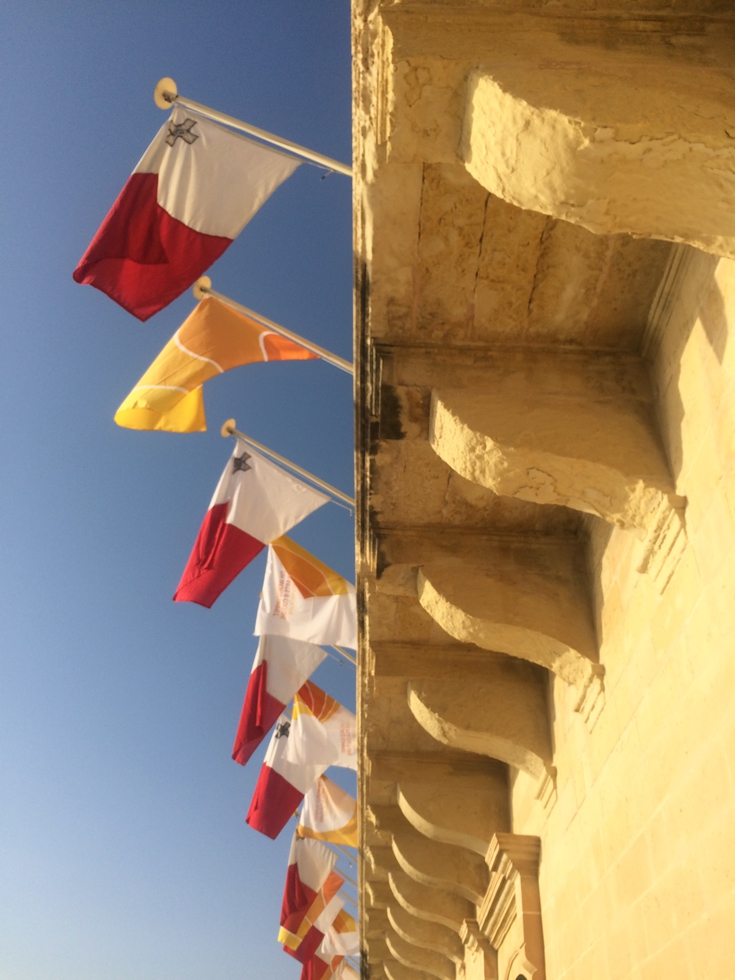
The 7th World Summit was organized jointly with the Arts Council Malta and took place in Valletta, Malta from 18 to 21 October, 2016.
Previous World Summits
Previous World Summits have proven their potential for stimulating international cooperation, learning and information exchange for arts support agencies, artists, arts managers and policy makers worldwide. The World Summits provide an excellent opportunity for strengthening civil society, promoting collaboration between non-profit and government sectors and for equipping artists, arts organisations and institutions to interact in a global and dynamic world. To date, six World Summits have been held:
- Ottawa, Canada 2000
- Singapore, 2003
- NewcastleGateshead, England 2006
- Johannesburg, South Africa 2009
- Melbourne, Australia 2011
- Santiago, Chile 2014