South Africa: The inheritance of a good name – ilifa legama elihle A Reflection on Heritage
BY
Papama Mnqandi
29.09.20
This heritage month I choose to reflect on what Bishop Andile Mbete calls the inheritance of a good name. amaXhosa call that “ilifa legama elihle.” I want to suggest that in South Africa we have an inheritance of a good name. When bassist Herbie Tsoaeli sings: “Masiyibambeni sonke. Yeyethu madoda otherwise kungonakala”, which when translated means: “let’s hold it together. It’s ours, otherwise there’ll be trouble”, I believe he is referring to this collective heritage that we must together safeguard. The name South Africa is an encapsulating label for the collective heritage of many names. Names represent our most prized forms of intangible cultural heritage. There are names of villages, cities and towns, rivers and mountains, streets and neighbourhoods. The names carry histories, meanings and hopes. The names are teleological. ‘Amazwi ayadala.’ They are evolutionary with some constant and some ever changing. They mark memorials, monuments and tombs, signalling pathways of those who have come and gone before us. Names are also contested and passed down from generation to generation in an invisible way. Their stories are sometimes changed through broken telephone. They tell of that horrible day when even a Sizwe Banzi had to die.
These are names of clans, tribes and ethnicities. These are names of colours such as those of a forgotten rainbow. These names are a call to memory, to depart from the horrid act of forgetting. As a child of this historic place of wonder and promise I am always called to remember. I am reminded of the battles that shaped South Africa, from Isandlwana to the land of great JongúMsobomvu Maqoma. I am called to remember those who fought and died so that I could inherit this name and revel in its riches. As heritage month follows on from women’s month I am called to remember the powerful women who have graced this place and given dignity to the inheritance that we have in this name. These are names like Lilian Ngoyi, Dr MaDosini Manqina, Dr Esther Mahlangu, Sarah Baartman, Nongqawuse, Helen Martins, Miriam Makeba and Zinzi Mandela.
This month we also celebrate selective aspects of our collective inheritance that are most times subjectively preferenced as patrimonial inventory for successive administrations within the state. These are drawn from the political orientation that underpins their selection. You will have therefore seen the efforts to rename towns and streets or the recent tussle around moving statues from the colonial archive to theme parks. This is the kind of stuff that accompanies our social imaginaries and gets cartoonists excited with a pencil. Thankfully though, all this has its limits guarded by the order of constitutional democracy. I do believe that although lived and with real life altering consequences, in the post-covid-19 period and the fourth industrial revolution we are witnessing imaginaries that are set to redefine the contested landscape of our heritage, that is to say; the South Africa we will inherit. As one ponders them, rethinking all that is encapsulated in the name South Africa will inform our process of heritage making for future generations. The covid-19 moment requires that we pause for a moment and acknowledge our collective trauma and loss and take stock of how far we have come.
Many of the people we have lost in this period are old women and men no matter their colour or creed. This means that mothers who have been the rock of many a household have left homes vulnerable with foundations shaken at the departure of the keystone. Grandfathers have departed with lots of wisdom and many a quiet mind. This is why when we started witnessing many loved ones and our elderly perish so sudden, I thought to myself, Covid-19 is robbing our memory bank.
To the imaginary that lies ahead however, many have opted to pin their hopes. It is at this moment that the old ways are dying so that the new ones may be born.
So much optimism and hope pinned on this fully designed world can be seen in how our cultural and heritage institutions have responded to dissemination of programmes under lockdown and in the context of our enforced retreat from the public sphere. The first to strike the virtual arena of cultural production was Mandisi Dyantyis who transposed his Cape Town International Jazz Festival performance to living room screens all over the country via a link from quicket and later a broadcast on youtube. Soon after, short clips of him singing the Xhosa folk words: “ngumama lo ondizalayo”, went viral with many chanting away upon receiving the footage via whatsapp or Facebook and other social media platforms. Here was a front row seat into heritage and culture in the 4IR. Many institutions and our cultural ministry soon responded by issuing notices of funding allocations to covid-19 relief response which in real terms often amounted to the re-direction of already committed resources. What endeavoured to be relief ended up punishing many cultural and heritage workers who already lead precarious lives.
Consequently this meant that whatever creative and innovative projects that may have been inspired by the pandemic would miss out of the spoils if they failed to use information technology or data bundles in particular. It is important to acknowledge the prevailing yearning of the state to onboard heritage and cultural programmes onto the highway of information technology. Key among these has been the National Heritage Council’s call for digitising heritage long before we imagined the pandemic. By contrast though, the large fleet of rural and township libraries, various cultural infrastructures such as arts centres and even museums will most likely remain closed on heritage day albeit in time for tanning some steaks.
Digitising heritage is also seen as a way of attracting youth to the heritage spaces. There is a sense that we must be the ones who tinker with the gadgets as that is what all young people are expected to do, be forever in a state of play. It would seem that Covid-19 gave the state full permission to realise its digitised culture and heritage dream without any reading of the realities of patrons of the cultural and creative industries in SA. Going virtual post-covid-19 is not unique to our scene. It is a global phenomenon. The National Arts Festival (NAF) was the second landmark installation of culture in this period. Although its unique contribution has been to also evade spatial politics in Makhanda by taking content onto virtual platforms and offering to some, better sound and production quality for their work than has often been the case in spaces like Dakawa, the jury is still out on its success in other aspects. Audience reach on digital platforms requires some careful reading. This would help us understand how many people visited the virtual platforms as compared to how many people engaged the actual theatre of the day. VNAF does remain one of our major contributions to the global cultural scene on how a virtual international festival under covid-19 is run.
It can be argued that going virtual was also good for it to evade Makhanda’s real politics which include a local administration in distress and water scarcity among other services in decline. It will continue to be an exciting area of study to inform policy on the sector in this paradigm. It is critical to remember that many South Africans are poor and without access to digital platforms and without the aesthetic education that would enable them to appreciate much of what is invested in by leading propagators of digitisation. While the majority are black Africans of different cultures, the name South African is about celebrating the inheritance of difference and diversity.
It is about inheriting a land where living with someone who does not look like you, nor talk or sound like you and does not dress or dance like you – is what you are good at.
It is about knowing that while others may write their histories and use all sorts of media to project to the publics, some too have passed it down in an invisible way. One of the key questions that the covid-19 outward spirit of digitisation has not addressed has been the value proposition it brings over the existing broadcast infrastructure housed at the SABC and especially in the context of our ailing national broadcaster and other SOE’s. This needs consideration in the face of how social media is disrupting traditional forms of marketing and advertising while globalising their value chains. The true test for digitisation should come if it proves its muster without the subversion of the SABC as a dynamic and preferred technology in its own right. It would seem that the politics of the SABC are fast eclipsing any prospect of comprehensive appraisal. The baby seems to be out with the bathwater. We need to look ahead at this social dilemma in the context of our collective inheritance. Will our heritage be characterised by the reinforcement of a digital retreat into our laagers or are we all just Africans in space? Will we embrace our resilience through diversity and engage in the regenerative practices of culture and heritage for a post-pandemic public sphere?
During the course of this month, the Executive Director of the South African Cultural Observatory, Ms Unathi Lutshaba, was invited to deliver an address to parliament. She used the moment to illuminate the importance of the creative economy. I have no doubt that her efforts will better the understanding of framing of the conception of heritage as a nation. If it did not do so on the day, it has definitely ignited some reflection in those who witnessed. In her closing remarks she said: “This heritage month, may we sing in all eleven official languages. May we wear traditional dress even if it is not our own. May we cook all traditional dishes even if spices and ground nuts are not our staples. This heritage month, may we reconnect with the inheritance of a truly diverse society. May we recognise its strength and potential to empower us to shape communities as complex adaptive systems and may all that amount to a resilient heritage which will undoubtedly unlock our sustainable futures. We do this so that a long time from now, our children’s children may proclaim to the peoples of the world, that indeed their heritage is rich and that in South Africa they have the inheritance of a good name by which to call it.”
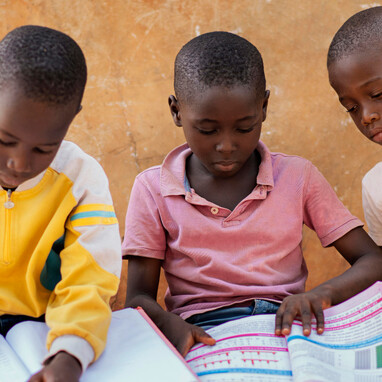
Behind us is s a rich treasure chest. It was passed down to us by generations who confronted each other so that we could live better and in harmony. It has some horrible artefacts that remind us of the most undesirable aspects of heritage. It also bears some of the most wonderful trinkets that imagine humanity lifted to its rightful heights. We have to rescue ourselves and our future generations while this covid moment gives us a chance to do so – in a quest to become most fully human. Perhaps the greatest crime visited on our process of heritage making was apartheid’s Bantu education and instruments’ decimation of communities and cultural networks. This includes the deliberate aesthetic deprivation of our people. The community we are yearning for needs us to end this crime against our creative humanity! We need a deliberate agenda to make aesthetic sensitivity and sensibility, culture, creativity and heritage education all available and accessible in our schools, libraries, arts centres and communities. Without this needed redress, we will not be sustainable. I wish every South African a happy and gifted heritage day and must say happy birthday to my grandfather who turns 88 on the 25th of September and salute him by saying: Ahhhhh Vez’amafa!
All the nations of the world know that it is being an immigrant that makes one an American. So too, do these nations of the world also know, that it is a love for diversity, living in harmony with peoples from all colour lines and cultures, being non-racial and non-sexist that makes us South African. This is my appraisal of our heritage of a good name. uMzansi Afrika ligama elihle lelifa lethu.
Papama Mnqandi is an Arts Innovator, writer, thinker and scholar. He is an activist in the Creative Economy, Youth Development and in Education. He spends most of his days in the Architectural Profession using place-making as a vehicle for unlocking SA’s Creative Economy, Social Entrepreneurship, Spatial and socio-economic justice. He Chairs the Provincial Chapter of the BMF Young Professionals in the Eastern Cape. He writes in his personal capacity.