
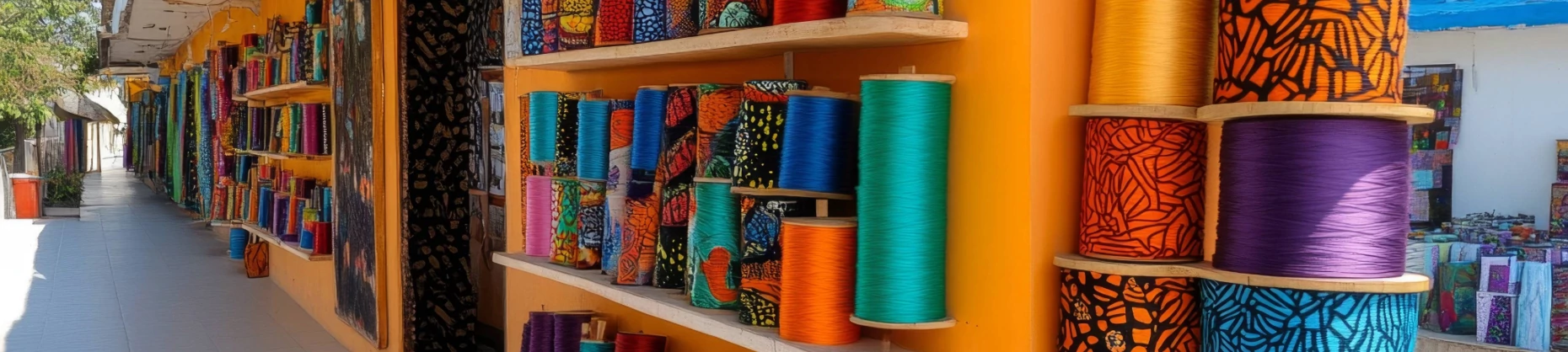

The main goal of this report is to provide a scoping study of the state of the South African fashion design sector, with a special focus on issues of environmental sustainability, innovation, and intellectual property.
Overview
The global fashion industry is worth US$2.4 trillion in total value and has great potential for sustainable growth and job creation (McKinsey, 2017). There is also growing recognition that fashion design is an important growth area for the African continent. The Department of Trade, Industry and Competition (DTIC, 2020) estimated the contribution of the fashion design sector to the South African economy to be R1 billion. Fashion also has important non-market cultural values: Cultural goods and services carry strong messages of heritage, identity, and style. Although it has great potential, the fashion design industry has received less research attention than other parts of the creative industries.
National data shows that, as in many African countries, international competition, along with global production outsourcing trends, dramatically reduced the size of the South African wearing apparel sector in the post-apartheid era. Internationally, the fashion sector has also been criticised for its role in the generation of environmentally damaging waste. Another important issue in the sector is copyright and intellectual property, which are essential if fashion designers are to monetise their content sufficiently to remain in the market.
The main goal of this report is to provide a scoping study of the state of the South African fashion design sector, with a special focus on issues of environmental sustainability, innovation, and intellectual property. Using web searches, business directories, and industry networks, a database of 400 South African fashion designers and related associations was constructed. The data was then analysed in terms of location (city and province) and patterns identified using GIS mapping techniques. Eight case studies were used to provide more detailed context on the business trajectories and career development paths of South African fashion designers.
The results showed that the South African, and African, fashion design sector has great potential for growth. While the sector is clustered in Johannesburg and Cape Town, fashion designers are present even in smaller cities, which suggests the potential for their role in more balanced regional development.
South Africa already has a series of national policies that recognize and seek to develop the creative industries, at national and regional level. The next important step, also identified by UNCTAD in their analysis of the African fashion sector (2023), is the coordinated and effective implementation of these policies.
Case study analysis showed high levels of concern for the environment and a focus on implementing more sustainable practices in design, manufacture and retail of their products. However, a lack of consumer awareness and limited buying-power in many parts of Africa means that the demand for such products is still low. The report concludes with policy suggestions and directions for future research.
Related Reports


Join Our Mailing List