

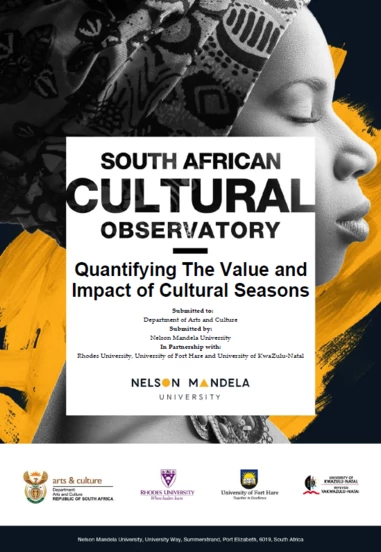
From this paper it is important to recognize the role of culture in globalization and specifically cultural globalization and this has had on diplomacy and Cultural Diplomacy.
Overview
Within the field of international relations, it is recognized that Cultural Diplomacy is a key diplomatic tool is used to advance their national interests by governments. Globalization links people, cities, regions and countries closer together that has led to our lives being intertwined with people in all parts of the world. Globalization has an impact on how diplomacy is executed and stresses the importance of Cultural Diplomacy.
If there is no certain way to measure it, then how do we know if a Cultural Diplomacy is a success or not? Should Cultural Diplomacy change the target's way of thinking? How long does the process of Cultural Diplomacy work?
While the concept of Cultural Seasons may be a new concept in South African, the practice is not. At the height of apartheid, South African diplomats crafted and re-packed cultural activities to appeal to foreign audiences for years.
The South African season in France, organized by the French Institute and the National Arts Council, took place from May to December 2013. It was the very first time that a Southern African country was honoured in France in the framework of Cultural Seasons. The French season in South Africa was held from July 2012 to the beginning of 2013.
Subsequently Cultural Seasons were held in China, Russia, Algeria, Gabon and Kenya.
There are many stakeholders or actors involved in Cultural Diplomacy. Their motives may therefore be different and may or may not be aligned. There are different advantages or disadvantages of Cultural Diplomacy for each stakeholder group:
-
- States or governments;
- Cultural and educational institutions;
- Nongovernmental organizations;
- Businesses as sponsors;
- Businesses as producers of cultural content; and,
- Individual artists.
Each constituency has its own goals and objectives, and these are difficult to align. However, it is crucial to the successful outcome that these must be aligned. This will also influence how much and what resources are contributed by each group.
The overarching policy framework for monitoring and evaluation in the South African Government is managed by the Department of Planning Monitoring and Evaluation. It not only looks at the results of projects and programmes but also if the right things are done and if these are being done in the right way. Nevertheless, it is difficult to evaluate Cultural Season because of intrinsic and extrinsic value that is inherent in both arts and cultural development and diplomacy.
Because there has not been the necessary alignment, Cultural Seasons have not delivered the extrinsic outcomes expected. Intrinsic values may well have borne more fruit. Extrinsic outcomes analyzed in this report include trade of cultural goods, tourism and foreign direct investment. With a few exceptions, there was little evidence of the impact of the Cultural Seasons. However targeted planning and better coordination could yield better outcomes.
Related Reports


Join Our Mailing List