

A central thread in the report is the question of value regarding languages, both in an intrinsic and instrumental sense.
Overview
This report has a three-fold objective essentially. Firstly, to provide an introduction to the field of Economics of Language (EOL) and its relevance to Language Policy and Planning (LPP). Secondly, it considers the context for the more systemic use of economic analysis for LPP at national and sub-national levels. Thirdly, it provides an important empirical study of the value-add of differing official languages regarding South Africa’s Gross Value Added (GVA) and, more specifically, the economic effects of creating and empowering language practitioners in South Africa, particularly in the promotion of the indigenous languages.
A central thread in the report is the question of value regarding languages, both in an intrinsic and instrumental sense. However, the distinction is often blurred in practice, with language being a means of conceptualising and communicating in respect of human activities, including commerce, a point on which economists across the centuries, such as Adam Smith and Jacob Marschak, concur.
While some of the classical economists considered the economic implications of language, the sub-field of the EOL has often been associated with a seminal and eponymous 1965 essay on the ‘Economics of Language’ by Jacob Marschak, an economist whose career commenced in one of the republics of post-revolutionary Russia and continued via Germany, England, and through to the United States of America (USA). Marschak focused on language and communication as a form of economic thinking and practice. The major stimulus to the emergence of the field in the 1960s and 1970s was the work of several Canadian economists interested in the relationship between English and minority French-speaking citizens in Canada and those territories and states with a French legacy, most particularly Quebec. Early work dealt with the relationship between language, ethnicity, and nationalism, as well as the question of wage differentials between English and French-speaking citizens. It was not long before not too dissimilar kinds of studies were conducted in the USA looking at issues such as differing returns to white English, Afro-American and Hispanic citizens and recent immigrants. Over time, these kinds of studies were refined and extended.
Developments in related spheres of work by economists, most notably the dynamics of discrimination in labour markets and the emergence of the economics of education, provided theoretical and methodological touchstones for the field of the EOL. The economics of education grew more quickly into a substantive and recognised area of economics speciality, but there remained significant intersections. This was particularly so with the refinement and popularisation of the idea of human capital through the work of Gary Becker.
Theories on discrimination in labour markets and human capital theory provided a springboard for a range of new work in North America on the EOL. The growing self-confidence in the EOL field saw its influence spread, most specifically to Europe and the United Kingdom (UK). The development of the European Union (EU) in political and economic terms especially saw a range of new languages being used officially as well, and, over time, a rejuvenation of certain regional and endangered languages, including a growth in identity politics in certain regions. The diffusion of EOL approaches to developing economies was a more uneven and fragmented process, but pockets of studies have expanded in recent decades, most notably in high-performing developing economies in the Far East.
By the turn of the century, the EOL field had been surveyed on occasion and was enjoying incremental growth. There were also new developments, most notably the application of game theory to the field, that added to the diversity of the field and also revived interest, inter alia, in the work of Marschak. The emphasis broadened from the relationship between language and economics and economic activity to the role of language in the discipline of economics.
Future Areas of Research
Several areas of research can be identified in contemporary EOL studies. A long-term and substantive field of enquiry is the relationship between language, status and income. In recent years there has been an increased recourse to applied and advanced econometric models in certain writings. Language proficiency and fluency in a dominant language are usually major determinants of wages. This is particularly the case for immigrants in their employment dynamics. Furthermore, there is significant evidence that returns on foreign languages in certain regions, such as the EU, result in higher wage rates. It makes good sense for countries to develop foreign language skills, especially concerning those languages used commonly in international trade. Language and earnings relationships are also variously conditioned by statistical and taste-based preferences from employers. Furthermore, at a broader level, the play of ethnicity can affect the language and earnings relationship.
A further area of focus is that of language dynamics which considers the economic dimensions of the development and future of languages. As Grin (2002) emphasises, the use of language tends to appreciate rather than depreciate the value of language. The survival prospects of minority and/or endangered languages are a further key issue in the field of language dynamics. There are also some signs of more direct efforts to leverage economic development aspects of language diversity promotion.
An additional area of focus is the broader relationship between language and economic processes. A key example is that of sub-national and regional economic development. International business, cross-cultural management, and language interventions are further relevant areas.
Apart from these fields of interest, there are new emerging directions. These include the increased use of interdisciplinary work with a synthesis between quantitative and qualitative analyses. In addition, there is also a shift from mathematical to computational models where simulation and algorithms are deployed. An interesting further line of inquiry is using and valuing large-scale narratives, especially with social media. Such work provides some possibility of leveraging latent value in certain indigenous and vulnerable languages. Finally, there is something of a return to classic writings to search for potential and neglected insights into economics’ relationship to language.
A modest but nevertheless important body of South African EOL-related studies is also considered. These have, to date, primarily focused on the returns to language proficiency in English and other official languages in South Africa. Despite continued unease in some language policy and activist circles, English is recognised internationally, including in many developing economies, in facilitating international trade and commerce. Some South African studies see, if anything, increased proficiency in the language, along with enhanced multilingualism, as the economically sensible option for the country.
The report also presents a series of good practice cases and examples. These include (i) a discussion of the United Nations (UN) International Decade of Indigenous Languages (IDIL); (ii) a consideration of the policy advice by Cambridge University and RAND Europe regarding inculcating foreign language proficiency as a means of increasing Gross Domestic Product (GDP) in the country; and (iii) the use of Artificial Intelligence (AI) to overcome language barriers in a cost-efficient way in higher education.
Chapter Two provides a compact discussion of the methodology and research methods employed in this report. The research is of a mixed methods nature. It has a substantive international, comparative review of the literature and theory on the field of the EOL. It includes a modest but not inconsequential body of literature on the South African dimension of EOL. In addition, it has an international and South African policy context predicated primarily on a desktop analysis. This is followed by quantitative modelling and estimation of the economic contribution of language to the South African economy. The study as a whole is informed by the importance of locating and enhancing the value (intrinsic and extrinsic) inscribed in and associated with languages in the South African contexts and the identification of the means for more systemic application of an EOL approach as a whole in LPP in public and even private sectors.
The empirical study estimates the contribution of language to South Africa’s GDP and builds on a profile and mapping of employees in language occupations. This is carried out using the Statistics South Africa (Stats SA) series on Labour Market Dynamic in South Africa (LMDSA), which commenced in 2008. The information on language occupations per Standard Industrial Classification (SIC) is used to determine the weighting employed in a Social Accounting Matrix (SAM) or Input-Output (IO) approach to extract the language-value-added component per SIC.
Regarding the relationship between language and international trade, the gravity model is used to determine the contribution of language to the value of total trade goods and services between the countries concerned.
Chapter Three examines select international trends in policy and practice in respect of (i) language diversity, (ii) the protection of indigenous and endangered languages, and (iii) their intersection with discourses on culture and development, cultural diversity, and sustainability and biodiversity. There is a particular focus on the UN and several of its agencies, including the United Nations Educational, Scientific and Cultural Organization (UNESCO), the United Nations Conference on Trade and Development (UNCTAD) and the International Labour Organization (ILO). This orientation allows a more coherent charting of the discourses in play.
A series of shifts to a more self-conscious promotion and protection of languages is noted. In addition, there are indications of the convergence of discourses on culture and development, and even the creative economy, with an increased concern with at-risk and/or indigenous languages. In these discourses, the growing emphasis on the question of the multi-dimensional value of such languages is noted. Intrinsic and more market-applicable notions of language are in play. The question of the beneficiation of indigenous languages is not unproblematic, and more evidence-rich analyses may be required in the future.
Chapter Four provides an overview of strategic contextual issues regarding LPP in post-apartheid South Africa. A brief pictorial and tabular status quo snapshot of the diversity and spatial distribution of the designated main languages in South Africa is presented. This is followed by a short overview of the early post-apartheid phase of LPP, including the establishment of the Language Plan Task Group (LANGTAG) and its subsequent report. This phase saw relatively extensive widespread involvement and resulted in a well-received report from the group in 1996. This popular phase was attenuated over the years and saw LPP processes become more state-centred and top-down in succeeding decades.
The chapter then proceeds to the strategic policy productions and discourses of the early 2000s and after, most notably the National Language Policy Framework (NLPF) and the associated Implementation Plan of 2003. The Department of Arts, Culture, Science and Technology (DACST) (until 1998) and later the Department of Arts and Culture (DAC) was, in effect, the lead agent of LPP, but the national Department of Education also played a crucial part, and the study focuses on their policy and implementation work in the early decades of the 21st century and certain institutional and policy shortcomings during this period.
Select challenges facing government during the time are outlined, and institutional shortcomings are discussed via a short discussion of the experiences and tribulations of the Pan South African Language Board (PanSALB), one of the leading agencies for language policy rights, as indicative of broader institutional issues. Some key debates about LPP in South Africa are indicated, including the critique of the persistence of a state-centred approach and new scholarly voices questioning the separation of community economic development and empowerment from the processes of conventional LPP. Challenges in regard to the protection of the endangered indigenous languages in South Africa, and the need to find cost-effective and broader-based interventions, including inter-sectoral and public and private partnering, are considered. The question of South Africa’s growing immigrant population and new language challenges is considered. In addition, the importance of foreign language proficiency in trade and the implications thereof is examined briefly, and the importance of foreign language acquisition for enhanced trade and interaction with the rest of Africa. This would include languages such as Swahili (as a regional lingua in France), French, Portuguese and Arabic.
Chapter Five presents the prime empirical evidence of the report, namely a structured measurement of the contribution of language to the South African economy. The modelling is predicated on identifying and enumerating a diverse grouping of language practitioners using a SAM and invoking a range of official data. It is estimated that the contribution made to South Africa’s GVA in 2019 was R10.3bn, representing 0.17% of the country's GVA. However, as language is a sine qua non for economic activity, this is, in effect, a conservative estimate. It is estimated that the language sector pays approximately R713m in taxes and receives R25m in subsidies. In addition, the sector is distinctly labour-intensive, which has positive implications for additional job creation in the relevant sectors.
Thereafter, a gravity model approach is developed for measuring the importance/effects of language on trade in South Africa. Having a common language improves trade between nations. Trade is enhanced further when speaking a common language. In most instances, a common language is a learnt language.
This South African empirical section would seem to confirm the thrust of the preceding discussion of international literature and their findings. It also suggests the value economic input can make in language policy deliberations and interventions.
Chapter Six deals with policy-relevant recommendations and future research areas outlined in the following section.
Recommendations
The first recommendation is predicated on the demonstrated importance of an EOL approach to and facility for economic analysis and inter-disciplinary collaboration in regard to LPP. The core recommendation is that the relevant agencies establish a cost-effective unit to focus on relevant EOL studies to complement existing agencies and their research teams in regard to strategic LPP matters and provide an essential economic and quantitative dimension. The establishment of such a structure on a formal public-private partnerships (PPP) basis to provide for a more balanced and comprehensive set of inputs as well as to help cut costs is advised. Links and partnerships with relevant international agencies and bodies would provide a fruitful exchange of views and collaboration.
The second recommendation is that the question of value is worth emphasising in all aspects of LPP activities. It entails the consideration of how (potentially) scarce resources are utilised in such activities and whether they are being used in a near-optimal fashion. The use of an economic perspective should assist more directly in the evaluation and monitoring of various interventions and comparing the outcomes.
The third recommendation emphasises the importance of increased proficiency in identified foreign languages to facilitate international trade, including the African continent. A programme introduced on an incremental basis, international languages compatible with international trade activities of South Africa should be taught in a targeted manner in South Africa, including the likes of Arabic, Mandarin, French, Spanish, Portuguese, Russian, and Swahili, and enhancing proficiency in English. This kind of intervention should boost South Africa’s GDP over time.
The fourth recommendation is that communities be involved more directly in LPP ventures. At various levels, from the national to the local, LPP should be appropriately integrated with socio-economic development efforts. There is a range of policy efforts at the sub-national level which could benefit from a more specific language emphasis. These include cultural and heritage tourism, business promotion and reindustrialisation initiatives, Cultural and Creative Industry (CCI) development ventures, including clustering and incubation efforts, and human capital and resource planning. Furthermore, and as mentioned above, the creative economy needs to mesh with language development and beneficiation more explicitly.
The fifth recommendation concerns the question of infrastructure, which can be underestimated in regard to language development and the related field of cultural policy. Public libraries are crucial and oft-neglected sites in this regard. International good practice suggests the possibilities of using select libraries and their staff and helpers to build specialised and accessible special collections around themes of language preservation and promotion and enhancing multilingualism and multiculturalism.
The final recommendation is the possibility of looking at volunteer capital to supplement resources utilised in language promotion in South Africa. Volunteer capital is a central aspect of the social and economic development strategising of certain countries and their sub-national governments. Australia is one the leaders in this regard, with its various state governments running formal volunteer divisions, which contribute several billion Australian dollars per annum in terms of contribution to GDP. Interestingly, the most recent report of the Eastern Cape Department of Economic Development, Environmental Affairs and Tourism (EC DEDEAT) raises the possibility of the Eastern Cape (EC) province looking at deploying such resources.
In addition to the above recommendations, a number of suggestions regarding future research are put forward. A stimulus to an integrated and policy-relevant research agenda and a means of crowding in resources and utilising existing networks would be an EOL unit. The international literature review has provided some guidelines for possible future research.
Downloads
Economics of Language
2.20 MB | .PDF | July 2026
Download Now
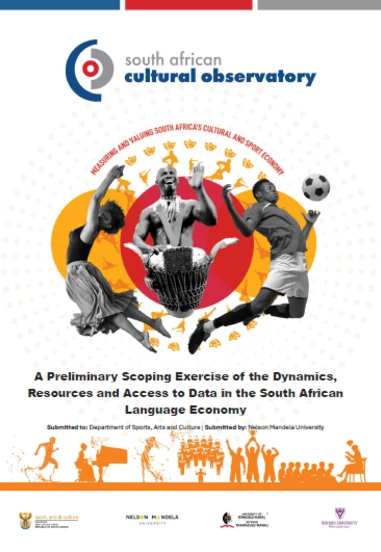
EOL Report 1 _A Preliminary Scoping Exercise
2.74 MB | .PDF | July 2026
Download Now
EOL Report 2 _Developing and maintaining a database
8.95 MB | .PDF | July 2026
Download Now
EOL Report 3 _Needs and capacity assessment
3.36 MB | .PDF | July 2026
Download Now
EOL Report 4 _A preliminary Audit-Overview of the Higher Education and Training Programmes for Language Practitioners - w
2.19 MB | .PDF | July 2026
Download Now
Related Reports


Join Our Mailing List